
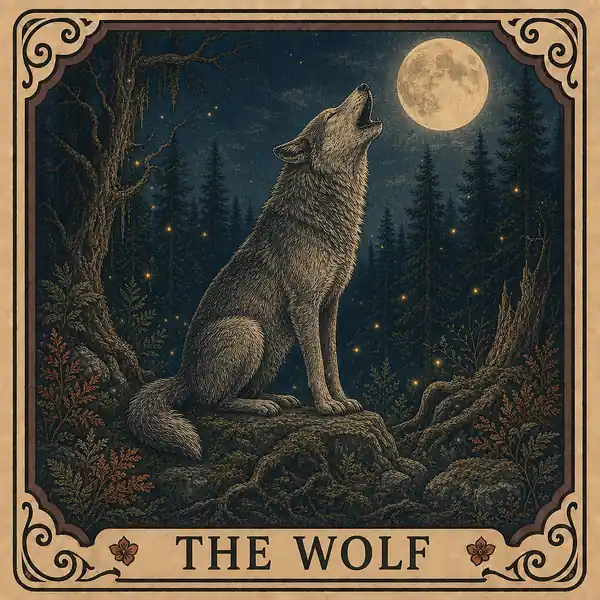
Night creative · about 15% of adults
Wolves run late. Mornings are slow and expensive, the day improves steadily, and your mind opens up in the late afternoon and evening.
Most Wolf problems are not sleep problems. They are scheduling problems, caused by a body clock that wants to start at ten being forced to start at seven.
What being a Wolf means
A chronotype describes the timing your body prefers, not the effort you are willing to make. Wolf timing is common, heritable and not a character defect.
The Wolf clock runs behind the solar day. Melatonin is released later, core temperature bottoms out later, and the natural wake signal arrives well after most alarms do.
Around 15 percent of adults are Wolves. Because school and work start early, Wolves carry the largest gap between the sleep they need and the sleep the calendar allows. That gap has a name in the research, social jet lag, and it behaves a lot like flying two time zones west every weekend.
Your energy curve through the day
7:00am to 10:00am · Fog
Genuinely impaired. Avoid decisions, difficult conversations and anything that needs precision.
10:00am to 1:00pm · Warming up
Usable for routine work, admin and meetings where you can mostly listen.
1:00pm to 4:00pm · Rising
Focus becomes reliable. This is the earliest block worth spending on real work.
5:00pm to 9:00pm · Creative peak
Your best window by a distance. Protect it rather than filling it with chores.
After 10:00pm · The trap
Alertness lingers and it feels productive, which is exactly how bedtime slips past midnight.
Ideal sleep and wake window
- Bedtime
- 12:00am to 12:45am
- Wake time
- 7:45am to 8:30am
- Sleep need
- 7.5 to 8.5 hours
- Caffeine cutoff
- 2:00pm
- Aim for late but fixed. A steady midnight to eight schedule beats an ambitious ten o'clock bedtime you never actually keep.
- Bright light in the first hour after waking is the strongest lever you have for pulling a Wolf clock slightly earlier.
- Dim and warm your lighting after 9pm. Evening light is what holds the Wolf clock late.
- If you have to move your schedule earlier, shift in fifteen minute steps every few nights. Jumping an hour at once simply fails.
- Negotiate a later start where you can. One hour of later start does more for a Wolf than any supplement.
A day on Wolf time
Strengths
- Sustained evening focus long after most people have stopped being useful.
- Strong creative and lateral thinking in the late afternoon and night.
- High tolerance for irregular or late-shift work compared with other types.
- Good social overlap with evening life without needing to force yourself awake.
Watch-outs
- Chronic short sleep during the week and long catch-up sleep at weekends.
- Caffeine after mid-afternoon, which pushes an already late bedtime later still.
- Scheduling important meetings before 10am and paying for it in quality.
- Judging yourself against Lion standards. The fix is timing, not effort.
Not sure you are a Wolf?
Take the free chronotype quiz and get your ideal bedtime from the sleep cycle calculator. No login, about 90 seconds.
Take the free quizNot sleeping like a true Wolf?
Enter your bedtime and wake time to see where you actually stand, then get a plan matched to Wolf timing and your real sleep debt.
Start Your Sleep CheckThe Lion, Bear, Wolf and Dolphin chronotype framework was created by clinical psychologist and sleep specialist Dr. Michael Breus, who introduced it in his book The Power of When. Snoozi is not affiliated with Dr. Breus. You can read his own work at sleepdoctor.com.